
TOEFL REAL-QUESTION PODCAST · 历史工程
Ancient Aqueducts
配套学习文稿 · 网页阅读版1. English Overview
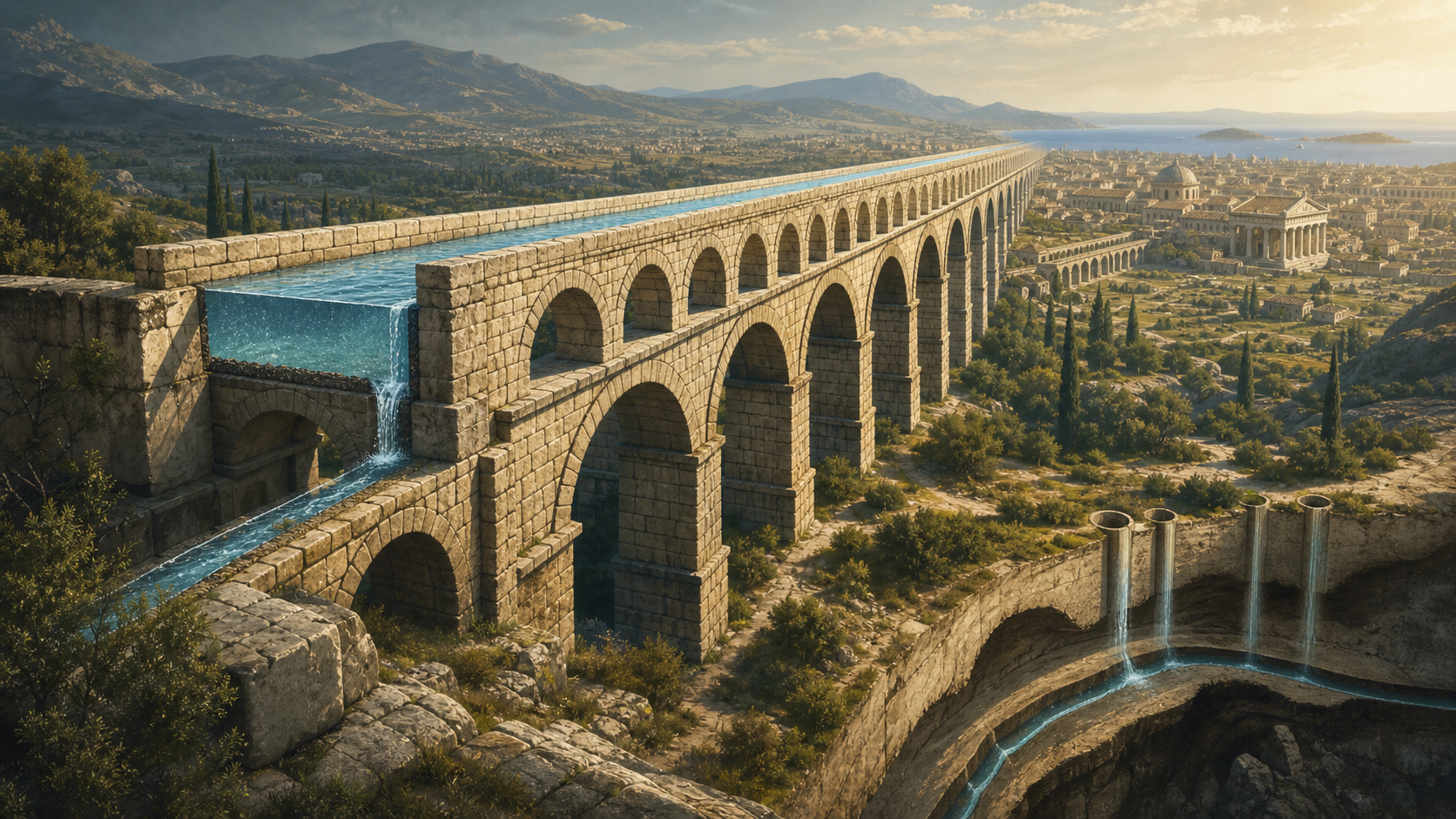
This article describes ancient aqueducts as major engineering achievements that carried water from distant sources to cities and towns. It focuses especially on Roman aqueducts, which used gravity, stone, brick, concrete, tunnels, bridges, and pipes to move water over long distances. Aqueducts supported Roman urban life by supplying public baths, fountains, households, and agriculture. The article also explains that other ancient civilizations, including Greece, Persia, and India, developed water transport systems. Persian qanats, for example, were underground channels that tapped groundwater and could remain useful for centuries.
2. 中文概览
这篇文章介绍古代水道工程,说明水道是古代文明最令人印象深刻的工程成就之一。水道的功能是把远处水源输送到城市和城镇。文章重点讲到罗马水道,它们利用重力,让水经过隧道、桥梁和管道长距离流动,并为公共浴场、喷泉、家庭和农业供水,从而支持罗马城市的发展和可持续性。文章还指出,水道并非罗马独有,古希腊、波斯和印度也发展了输水系统,其中波斯的坎儿井是利用地下渠道获取地下水的耐久系统。
3. Key Background Knowledge
Aqueduct: a structure or system built to transport water from a source to a settlement or farmland. 水道;渡槽:用于把水从水源输送到居民点或农田的结构或系统。
Gravity-fed system: a system that moves water by using the natural downward pull of gravity rather than pumps. 重力供水系统:利用重力使水自然向下流动,而不是依靠水泵的系统。
Roman infrastructure: public engineering works, such as roads, bridges, baths, and aqueducts, that supported Roman cities. 罗马基础设施:支撑罗马城市运行的公共工程,例如道路、桥梁、浴场和水道。
Pont du Gard: a famous Roman aqueduct bridge in France that remains standing today. 加尔桥:法国著名的罗马水道桥,至今仍保存完好。
Qanat: a Persian underground water channel that taps groundwater and carries it to settlements or fields. 坎儿井:波斯地下输水渠道,用来获取地下水并将水送到居民点或农田。
4. 文章思维导图
中心主题:Ancient Aqueducts: engineering systems that moved water and supported urban development
Paragraph 1|段落主旨:Roman aqueducts were advanced engineering systems that supplied water and supported city growth.
主要细节:Aqueducts transported water from distant sources to cities and towns.
主要细节:Romans perfected aqueduct construction by using gravity over long distances.
主要细节:Roman aqueducts used stone, brick, concrete, tunnels, bridges, and pipes.
主要细节:They supplied water for baths, fountains, households, and agriculture.
主要细节:The Pont du Gard in France is a famous surviving example.
Paragraph 2|段落主旨:Other ancient civilizations also developed important water transport systems.
主要细节:Ancient Greece, Persia, and India built systems for moving water.
主要细节:Persian qanats used underground channels to tap groundwater.
主要细节:Some aqueduct systems were durable enough to last for centuries.
主要细节:Construction and maintenance required significant resources and labor.
主要细节:Despite the cost, aqueducts were crucial investments in ancient infrastructure.
5. Key Vocabulary
| Key Vocabulary | Plain English | 中文意思 | Collocation | 例句 |
|---|---|---|---|---|
| aqueduct | A structure that carries water from one place to another. | 水道;渡槽 | build an aqueduct; Roman aqueduct | The aqueduct carried water from distant hills to the city. · 中文:这条水道把远处山地的水输送到城市。 |
| engineering feat | An impressive achievement in design or construction. | 工程壮举;工程成就 | an impressive engineering feat; a remarkable feat | Roman aqueducts were an impressive engineering feat. · 中文:罗马水道是一项令人印象深刻的工程壮举。 |
| civilization | A complex society with cities, government, technology, and culture. | 文明 | ancient civilization; advanced civilization | Many ancient civilizations developed systems to manage water. · 中文:许多古代文明发展了管理水资源的系统。 |
| transport | To carry or move something from one place to another. | 运输;输送 | transport water; water transport system | Aqueducts were built to transport water to towns. · 中文:水道被建造出来,用于把水输送到城镇。 |
| perfect | To improve something until it becomes very effective. | 完善;使臻于完美 | perfect the construction; perfect a technique | The Romans perfected the construction of long-distance aqueducts. · 中文:罗马人完善了长距离水道的建造技术。 |
| gravity | The natural force that pulls things downward. | 重力 | use gravity; gravity-fed water system | Roman engineers used gravity to keep water flowing. · 中文:罗马工程师利用重力让水持续流动。 |
| sustainability | The ability to continue over time without using up necessary resources. | 可持续性 | urban sustainability; support sustainability | Water supply was important for the sustainability of Roman cities. · 中文:供水对于罗马城市的可持续性非常重要。 |
| infrastructure | Basic public systems and structures that help a society function. | 基础设施 | ancient infrastructure; invest in infrastructure | Aqueducts were a crucial part of ancient infrastructure. · 中文:水道是古代基础设施的关键组成部分。 |
| qanat | An underground channel used in Persia to bring groundwater to the surface or to settlements. | 坎儿井 | Persian qanats; qanat system | Qanats carried groundwater through underground channels. · 中文:坎儿井通过地下渠道输送地下水。 |
| groundwater | Water stored under the ground. | 地下水 | tap groundwater; groundwater source | Persian qanats tapped groundwater sources in dry regions. · 中文:波斯坎儿井在干旱地区获取地下水资源。 |
| durable | Strong enough to last for a long time. | 耐用的;持久的 | exceptionally durable; durable structure | Some ancient water systems were durable enough to last for centuries. · 中文:一些古代供水系统非常耐用,可以持续数百年。 |
| maintenance | Work done to keep something in good condition. | 维护;保养 | require maintenance; construction and maintenance | Aqueduct maintenance required resources and labor. · 中文:水道维护需要资源和劳动力。 |